Last updated November 21, 2026
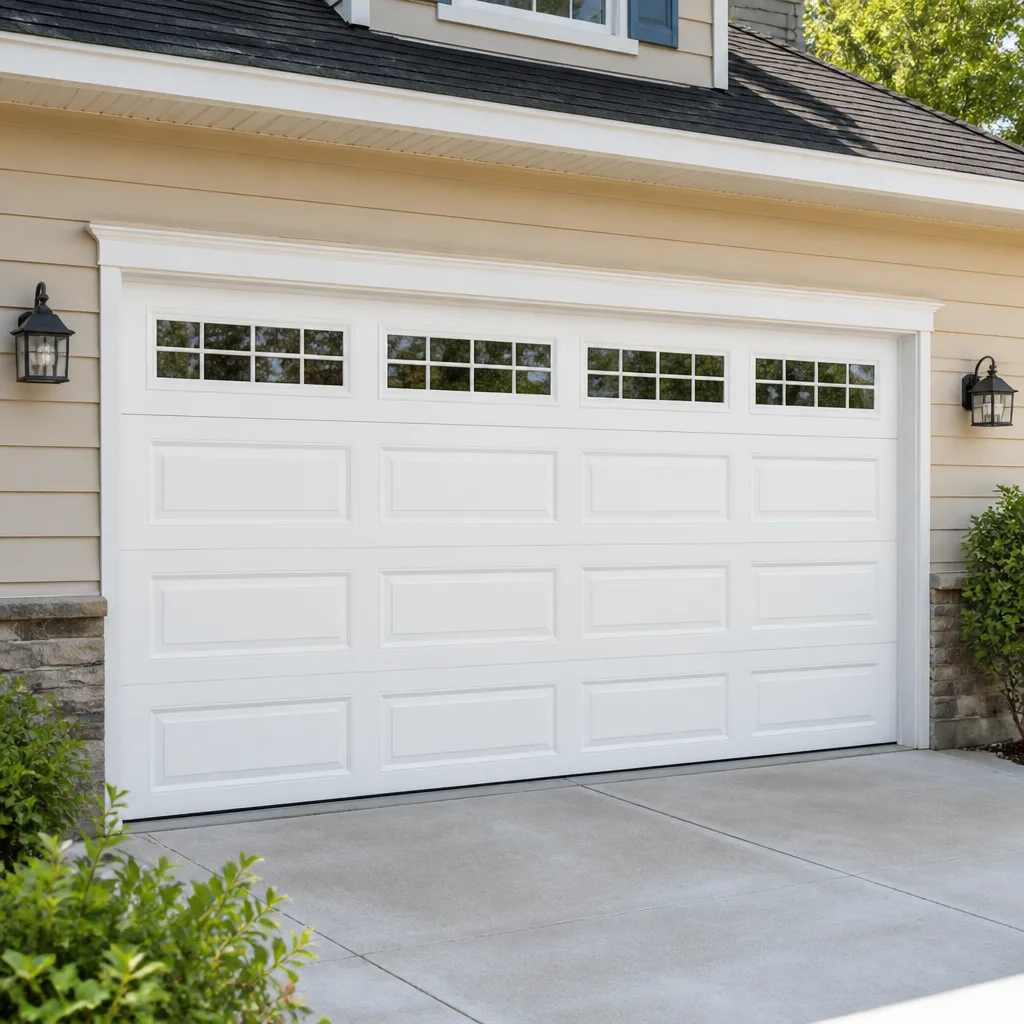 Raised-panel steel
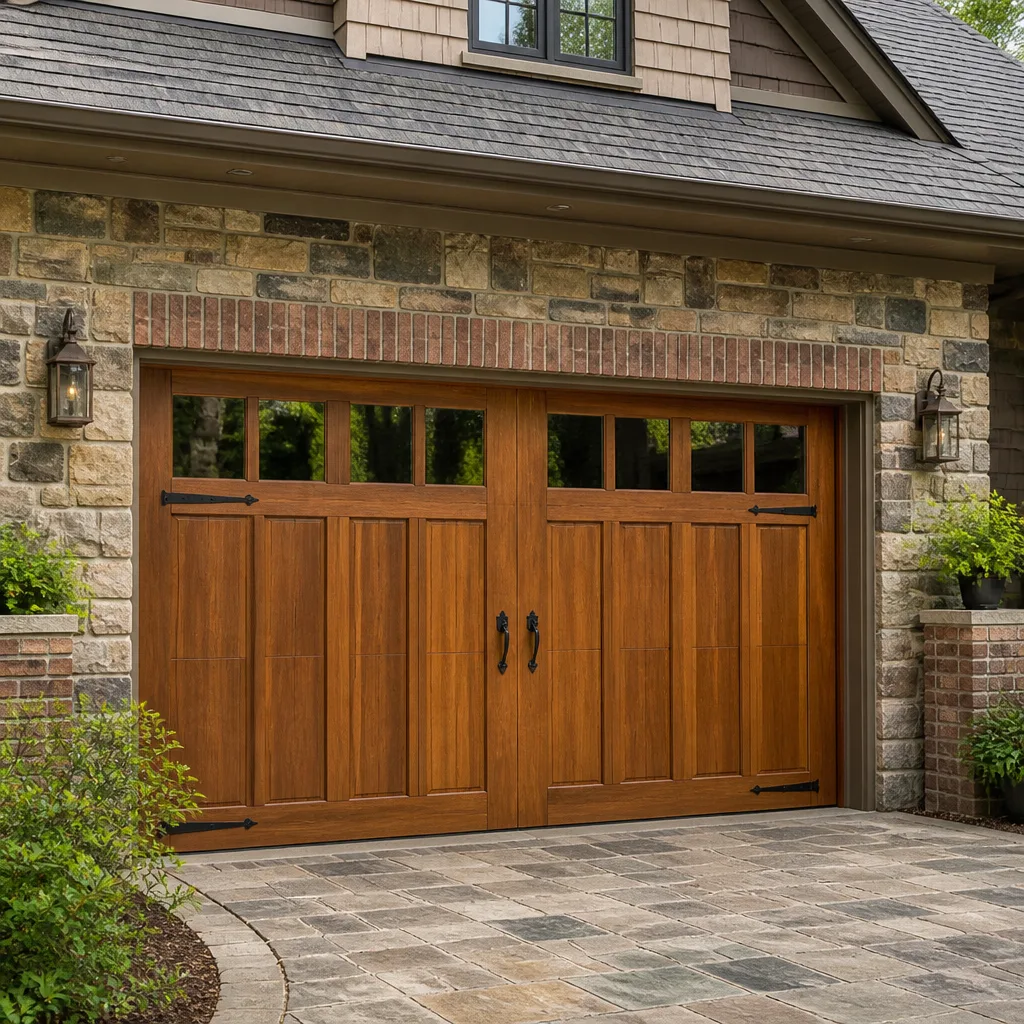 Carriage house
 Modern flush
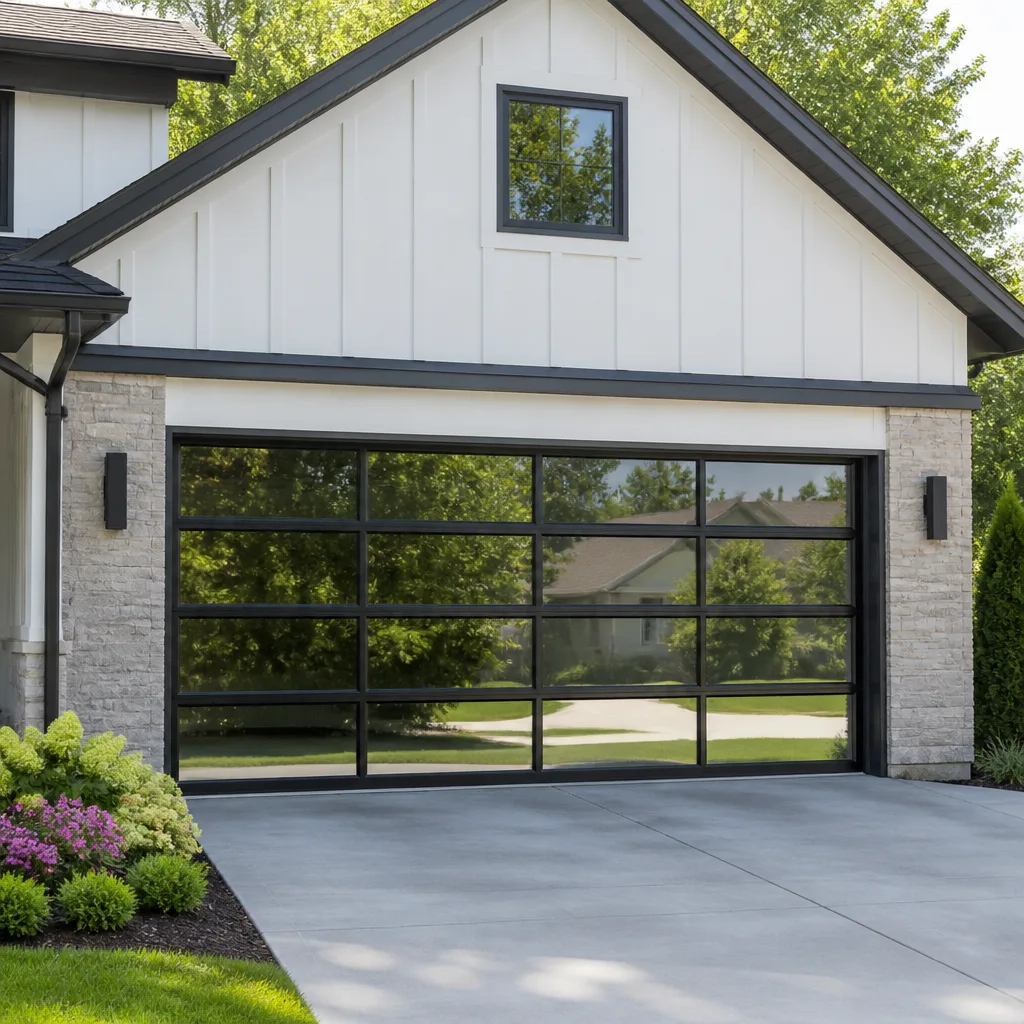 Full-view glass
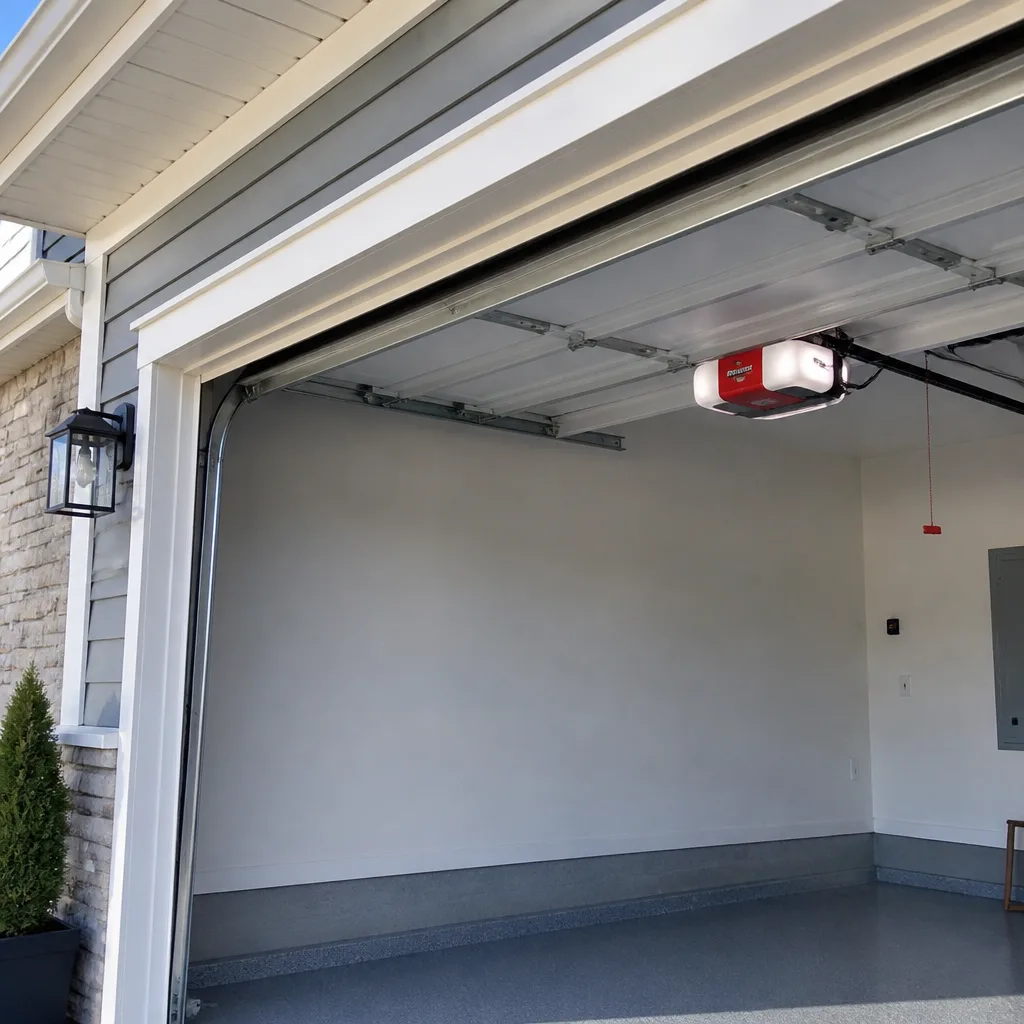 LiftMaster openers
 Chamberlain openers
Full 25-point door and opener safety check with every visit - springs, cables, rollers, tracks, and your LiftMaster or Chamberlain opener included
You get a price before we start. It does not change when the pro arrives.
Get your free estimateDIY vs Professional Garage Door: The Maple Grove Homeowner’s Decision Guide
Most guides to this question start in the wrong place. They ask how handy you are, then hand out a scorecard of tasks you’re “allowed” to try. That framing misses the point. A torsion spring under tension stores enough energy that a failure releases it with a violence that has nothing to do with your skill level – a careful, capable homeowner is still in real danger if the spring lets go. Meanwhile, lubricating rollers and straightening a photo-eye are jobs almost any Maple Grove homeowner can finish in twenty minutes. So the honest question isn’t whether you’re handy enough. It’s whether the task belongs in the DIY category at all. This guide draws that line task by task, then walks through cost, tools, Minnesota weather, and what to do when a small job turns out to be a big one.
Quick Answer
Safe DIY garage door jobs are lubrication, sensor alignment, track cleaning, visual inspections and replacing a remote battery. Dangerous jobs – torsion springs, cables, bottom brackets, and panel replacement under tension – should go to a trained professional regardless of your skill level. Anything involving a powered opener’s internal wiring or a door that has come off its track also belongs with a pro. If you’re unsure which category your problem falls into, a free estimate in Maple Grove will settle it faster than a YouTube deep dive.
Styles & brands we work with
- Raised-panel steel
- Carriage house
- Modern flush
- Full-view glass
- LiftMaster openers
- Chamberlain openers
Table of Contents
- Why This Is a Risk Question, Not a Skill Question
- What You Can Safely Do Yourself: The Task-by-Task List
- What You Should Never DIY: The Hard Line
- Tools and Knowledge Gaps That Separate Safe From Dangerous
- How Minnesota Weather Shifts the DIY Calculus
- The Real Cost Comparison: DIY Parts vs. Professional Labor
- When a DIY Attempt Reveals a Bigger Problem
- When to Call a Professional
Why This Is a Risk Question, Not a Skill Question
Garage doors are the largest moving object in most homes, and they operate under stored mechanical energy. A torsion spring, wound tight and holding a door’s weight in balance, is the part that makes the whole system work – and the part that makes it hazardous. When one fails under tension, the stored energy releases instantly. That’s the physics behind the comparison in our opening. It’s also why the DIY conversation should start with a simple filter: does the task involve stored energy, or does it not?
That filter sorts every garage door job into two clean piles.
- Low-energy tasks – cleaning, lubricating, aligning sensors, checking balance, swapping a remote battery. The worst outcome is usually a door that still doesn’t work. These are reasonable DIY territory for most homeowners.
- High-energy tasks – springs, cables, bottom brackets, anything you do while the door’s weight is being held by a wound spring. The worst outcome is serious injury. These are not DIY territory, no matter how many tutorials you’ve watched.
Here’s why the typical “are you handy?” framing breaks down. We’ve worked with plenty of Maple Grove homeowners who are genuinely capable – they’ve rewired outlets, replaced water heaters, built decks. Skill isn’t their problem. The problem is that torsion spring work rewards a very specific kind of training and tooling, and it punishes a single mistake without warning. Handiness doesn’t neutralize stored energy.
That’s why we treat garage door spring repair as its own safety-critical service, not a bullet point on a general repair list. Springs fail more than anything else on a door, and they’re the most commonly mishandled. Getting the category right on the front end saves a lot of grief on the back end.
What You Can Safely Do Yourself: The Task-by-Task List
Plenty of garage door maintenance genuinely belongs in the DIY column, and we’d rather you do these jobs than pay for them. They’re low-risk, they extend the life of your door, and they catch problems while they’re still cheap to fix. Here’s the definitive list, with the reasoning behind each verdict.
- Lubricating hinges, rollers and tracks. A dry door gets noisy, binds, and wears its rollers out faster. A few drops of garage door lubricant on the hinges, roller bearings and the spring (if it’s an extension spring, not torsion) quiet things down and reduce wear. Reason it’s safe: no stored energy is touched, no adjustment is made. This is the single highest-value owner task on any door.
- Aligning safety sensors. The two small lenses near the floor send an invisible beam across the opening. If they’re knocked out of line, the door won’t close – a common and completely safe fix. Reason it’s safe: you’re adjusting a bracket and a lens, not the door’s mechanics. Loosen, nudge, retighten, test with a moving object in the beam.
- Cleaning tracks. Dirt and road grit accumulate in the vertical tracks and turn into friction over time. A dry cloth and a stiff brush handle it. Reason it’s safe: cleaning doesn’t disturb anything structural.
- Testing the auto-reverse safety feature. Place a small block of wood on the floor in the door’s path, close the door, and confirm it reverses on contact. Reason it’s safe: you’re testing a feature every modern opener has, not adjusting it. If it fails, that’s a call.
- Checking the door’s balance. Disconnect the opener, lift the door halfway, and let it go. A balanced door holds its position. A door that drops or rises on its own is telling you its springs are going. Reason it’s safe: your hands are on the door, not the spring or a cable.
- Replacing a remote battery or re-pairing a remote. A dead remote or a remote that’s forgotten its code is usually a five-minute fix with the opener’s learn button. Reason it’s safe: no door mechanics involved.
- Replacing a weather seal along the bottom. A worn bottom seal lets in drafts, water and mice – a real issue in a Minnesota winter. A replacement slide-on seal is a manageable Saturday morning project. Reason it’s safe: the door stays closed and supported while you work.
Notice the pattern. Every task on that list avoids two things: stored energy and the door’s weight. That’s the whole test. If you can do the job with the door resting in its normal position and your hands nowhere near a spring, cable or bracket, it’s probably yours to handle.
What You Should Never DIY: The Hard Line
This is the part where a professional has a duty to be direct. Torsion spring replacement, cable replacement, bottom bracket replacement, and lifting a door out of a track all carry genuine risk of serious injury. Not “if you’re careless” risk – “even with care” risk. The torsion spring on a standard residential door is wound to counteract the weight of the door; release it under the wrong conditions and it can cause severe harm.
What that means in practice: no step-by-step instructions from us on spring or cable work, because the honest version of those instructions would read “call someone trained.” If you’re determined to find a tutorial, we’d ask you to read the safety warnings in it – the ones about winding bars, the ones about never touching a spring under tension, the ones about the bottom bracket. Those warnings are there because the danger is real.
The owner can’t touch these safely on a residential garage door, and the same logic extends further than most people expect:
- Torsion and extension springs – stored energy, dangerous whether you’re handy or not.
- Cables and drums – under extreme tension; a snapped cable can whip with force.
- Bottom brackets – the point where the most tension in the door system concentrates.
- Panels under load – a door that’s lost a panel or a spring is a door being held by less than designed, and panels can be heavier than they look.
- Opener wiring and internal components – main voltage inside a powered opener. A trained technician’s job, not a weekend task.
We’re not saying this to keep the work. We’re saying it because a spring that fails during a homeowner repair is a bad outcome for everyone, and no part of the job is worth that. Repairing garage door repair correctly starts with knowing which category of job you’re standing in front of.
Tools and Knowledge Gaps That Separate Safe From Dangerous
On the suitable tasks, the tool gap is small. A socket set, a screwdriver, garage door lubricant, a rag and a flashlight handle most of the safe list. Nothing exotic. The knowledge gap is about how the system fits together and what an early failure sign looks like. Homeowners who can read their door tend to catch problems before they become expensive.
On the dangerous tasks, the tool gap is wide and the knowledge gap is wider. Here’s what a trained technician brings that a well-stocked home toolbox doesn’t:
- Winding bars sized for the spring. Using the wrong tool on a wound spring is one of the ways things go wrong. There’s no household substitute.
- Knowledge of the door’s weight-to-spring ratio. Springs are matched to the door’s weight and height. A spring of the wrong size is worse than a broken one – it can be over-tensioned or under-tensioned and fail hard.
- Cable tensioning knowledge. Cable and drum assemblies are set to specific tensions; guessing at cable adjustment puts the whole system out of balance.
- An understanding of brand-specific geometry. Door and opener systems vary by manufacturer. A Clopay or Raynor door handles differently from the next one. Our technicians are certified to work on eight of the major residential brands, so they’re not learning your door on your dime.
That last point matters more than it sounds. When someone has worked on Craftsman, LiftMaster, Chamberlain and Genie openers enough times, they recognize the pattern in a dead remote, a mislearned code, or a board that’s given up – instead of guessing. Brand familiarity is the difference between a diagnosis and a process of elimination.
How Minnesota Weather Shifts the DIY Calculus
Maple Grove winters change the DIY equation in ways that summer guides never mention. A few of those local realities:
- The work happens in a cold garage. A long DIY repair in an unheated garage in January is a different job than the same repair in July – colder hands, stiffer parts, shorter patience. Tasks that are safe when you’re warm and unhurried get riskier when you’re cold and rushing to get back inside.
- Metal contracts in the cold. Tracks, hinges and hardware tighten up when temperatures drop, and hardware that was fine in fall can bind or squeak. Cold-weather noise often turns out to be a lubrication problem, not a mechanical one – a fix that belongs in the DIY column.
- Frozen hardware can feel like a bigger fault. A door that won’t open smoothly on a subzero morning may just have ice binding a roller or a stiff track. Before you reach for tools, check for ice and clear it. If the door still acts wrong after a thaw, that’s when the DIY list runs out.
- Routine maintenance is easier in the shoulder seasons. Lubricating and inspecting in fall and spring is more effective than trying to fix everything after a cold snap.
None of that makes the winter DIY calculus dramatically different from summer – the safe tasks stay safe, and the dangerous tasks stay dangerous. But it does shift how much a homeowner can reasonably do in the cold, and when a smart call beats a cold, frustrated afternoon. That’s especially true for anything involving a spring, where “I’ll just get this done before it gets any colder” is exactly the mindset that leads to a mistake.
The Real Cost Comparison: DIY Parts vs. Professional Labor
Homeowners usually want the bottom line on cost, and it’s a fair question. Parts-only DIY looks cheaper on paper, but it’s rarely the whole story. Here’s how the math really works out, including the parts of the comparison that don’t show up on the price tag.
- Parts-only cost: the spring, cable or sensor costs the same whether a homeowner buys it or a technician does. That’s where the comparison starts, and where most DIY calculators stop.
- Time: a spring replacement is typically a one-to-two-hour job for a trained technician. It’s a half-day-or-longer job for a first-timer, if it goes well. Time has value, and so does the risk exposure.
- Risk: no line item covers an injury. That’s the argument for the professional side, and it’s the one that’s hardest to quantify but easiest to justify.
- Warranty and callbacks: when a trained technician installs a spring, the work is backed. When a homeowner installs and the door still misbehaves, there’s no warranty to call. A parts-only attempt that fails usually costs more in the end – a second spring, a bent track, a door off balance.
- Correct part the first time: getting the wrong spring weight or the wrong opener component is one of the most common DIY costs. Buying twice is more expensive than buying once.
Here’s the practical comparison in table form. Exact prices depend on the door, the part and the brand – both Clopay and Amarr, for example, run a range – but the pattern is consistent:
- Lubrication kit: inexpensive DIY part; no labor worth comparing.
- Safety sensor replacement/alignment: low-cost part; often bundled with a service visit if you’re already booking one.
- Bottom weather seal: modest part cost; bottom-seal replacement is a reasonable DIY task if the door is in good shape.
- Torsion spring (single): parts cost plus the risk of a dangerous job; professional labor is part of a written estimate and priced on inspection.
- Matched spring pair: nearly always replaced together – roughly double the single-spring work.
- Cable and bracket work: parts plus labor; genuinely not a homeowner job.
- Opener board or motor: varies by brand; diagnostics come first, then a written estimate.
We don’t publish fixed prices because a garage door is a system, and the correct estimate depends on what’s actually wrong. What we will commit to is that a written estimate comes before any work starts – if the number changes, it changes before we pick up a tool, not after.
When a DIY Attempt Reveals a Bigger Problem
This happens more than you’d think, and it’s not embarrassing. A homeowner starts a lubrication job and notices a cracked cable. A sensor alignment turns into a dead opener after a power surge. A bottom seal replacement turns up a rusty bottom section. The first instinct is to push on alone. The better instinct is to stop and call.
Here’s what to do if you’re in that position:
- Stop the work. If you’ve found something that looks like an energy-related part – a cable, a spring, a bent bracket – don’t keep going. Set the tools down.
- Leave the door in a safe position. If it’s open, get it closed gently; if it’s closed, leave it closed. Don’t force it.
- Call for an opinion. We can’t tell you if your spring is safe over the phone, but we can tell you whether the symptoms match a job we’d want to look at. Same-day and emergency service is part of what we do, so a call today beats a hopeful week of waiting.
- Get a written estimate. We come out, diagnose it properly, and give you a price before any work starts. No pressure, no rushed decision.
There’s no penalty for a half-finished DIY job. Plenty of our calls start with “I tried to fix the sensor and now it’s doing something else entirely.” That’s fine. It’s a normal way to get to a repair, and it gets you back up and running.
Common Mistakes to Avoid
- Attempting a spring or cable job because a tutorial made it look simple. The video cuts the scary part. Stored energy doesn’t.
- Using the wrong lubricant. WD-40 and grease in the tracks can attract grit and make the binding worse. Garage door lubricant, thin and clean, is what belongs there.
- Fixing a sensor with the door powered on. Cut the power before you touch a sensor bracket. It takes seconds and removes a real hazard.
- Assuming a slow door is an opener problem. In Maple Grove, cold weather and aging springs are far more often the cause. Diagnose before you replace.
- Ignoring a door that’s out of balance. A door that won’t hold its position means the springs are failing, and that’s a call, not another adjustment.
- Working on the door with the opener still connected. Any manual check should start by pulling the opener’s release cord so the door isn’t fighting the opener.
- Trying to fix a door that’s fallen off its track. This is a genuinely dangerous situation. Don’t push the door back into the track. Call.
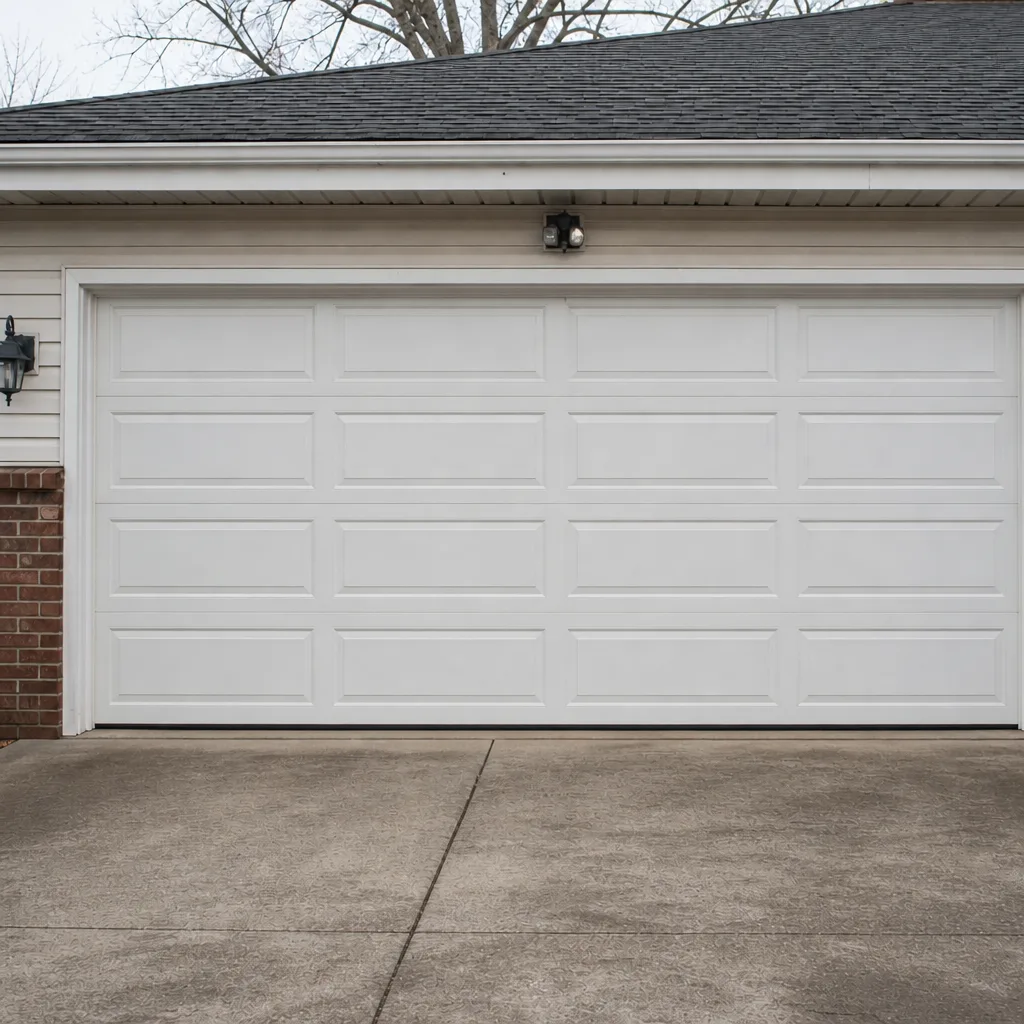
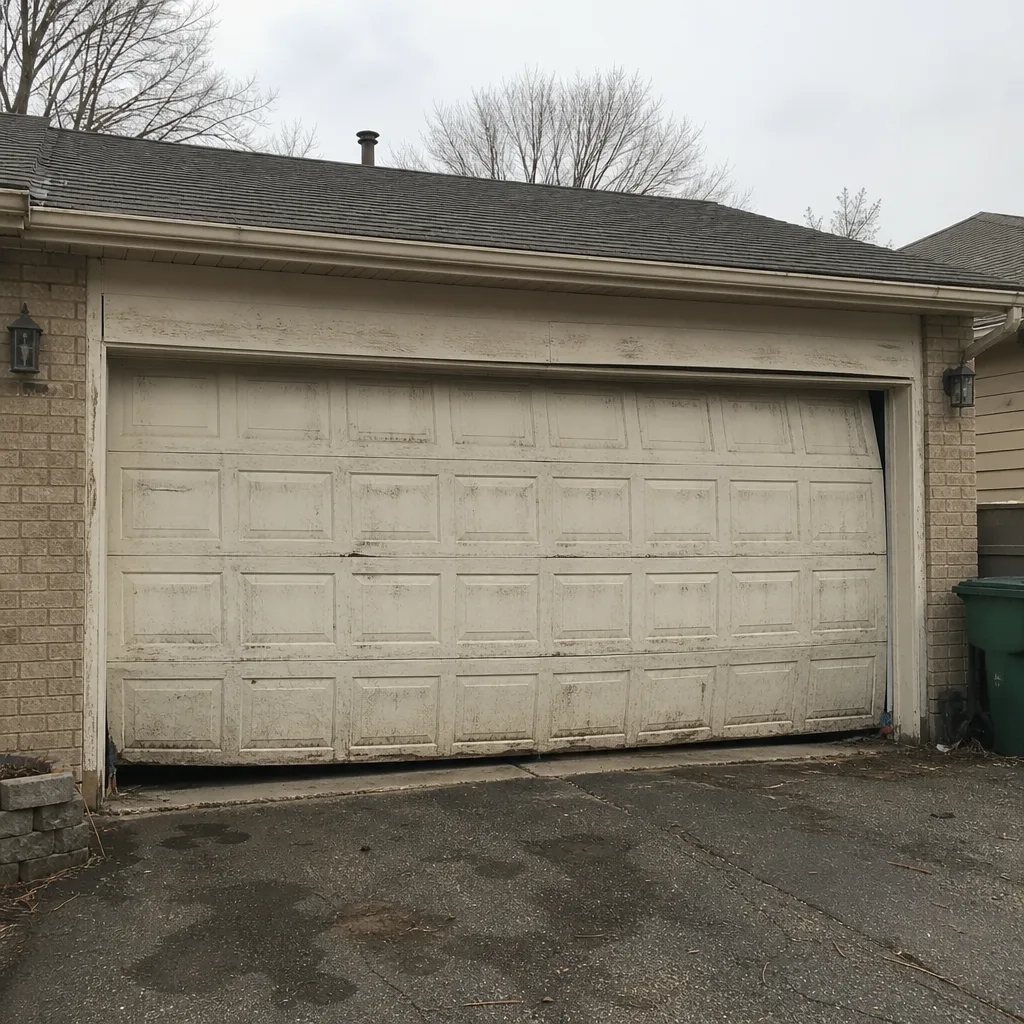
See the difference
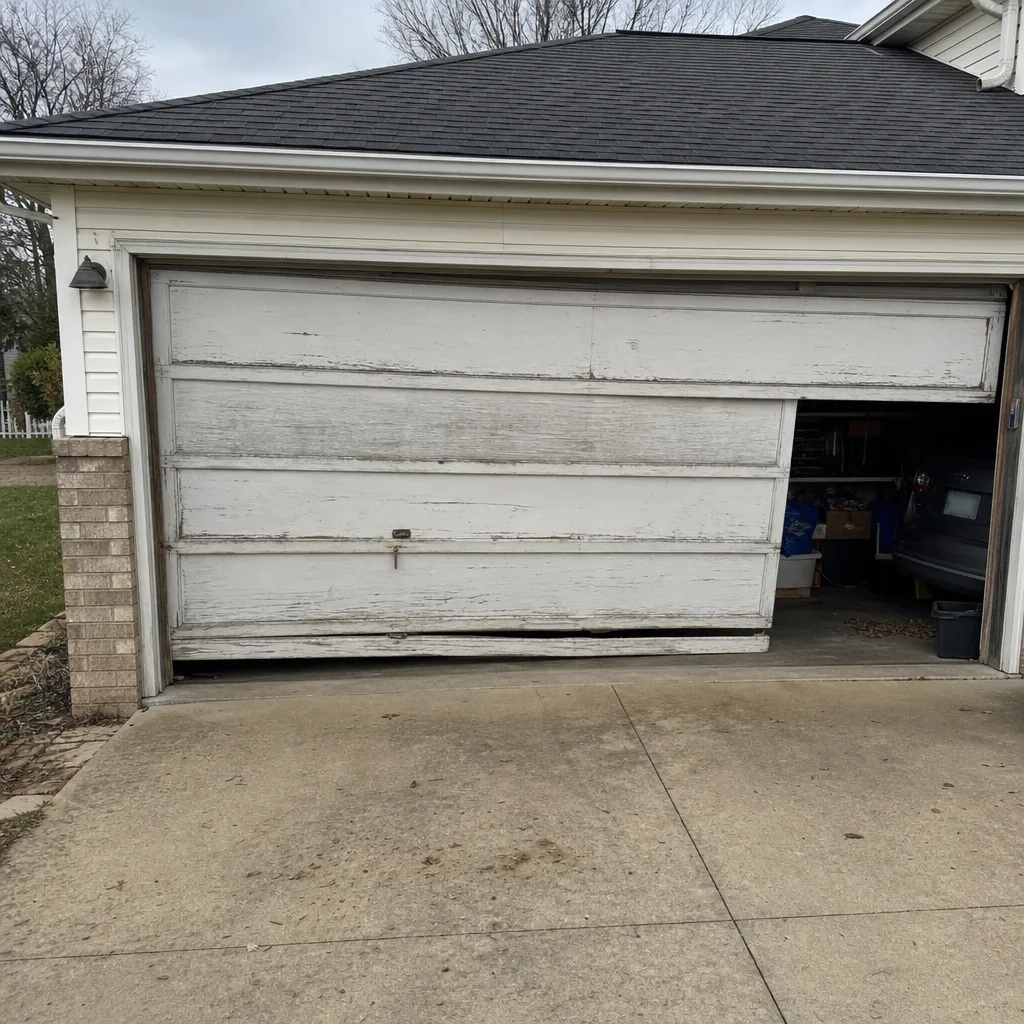 Before
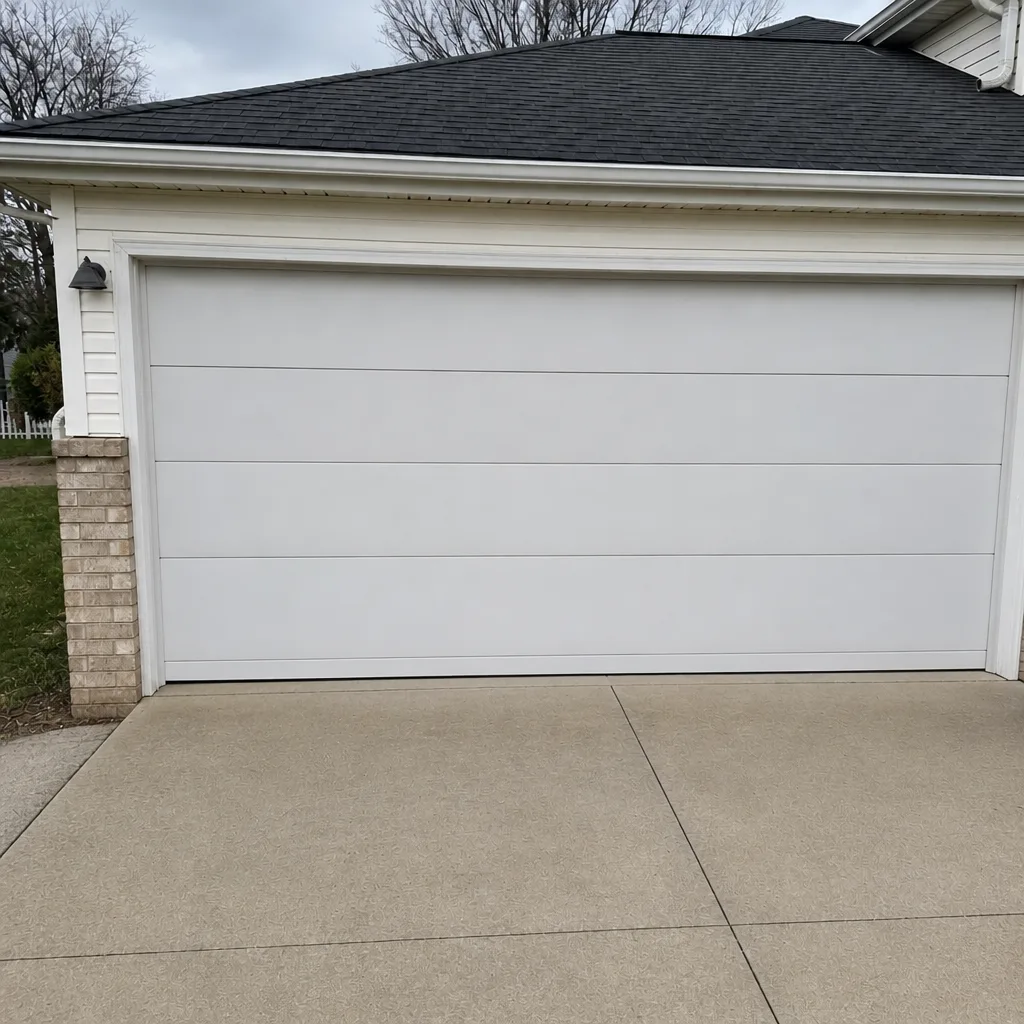 After
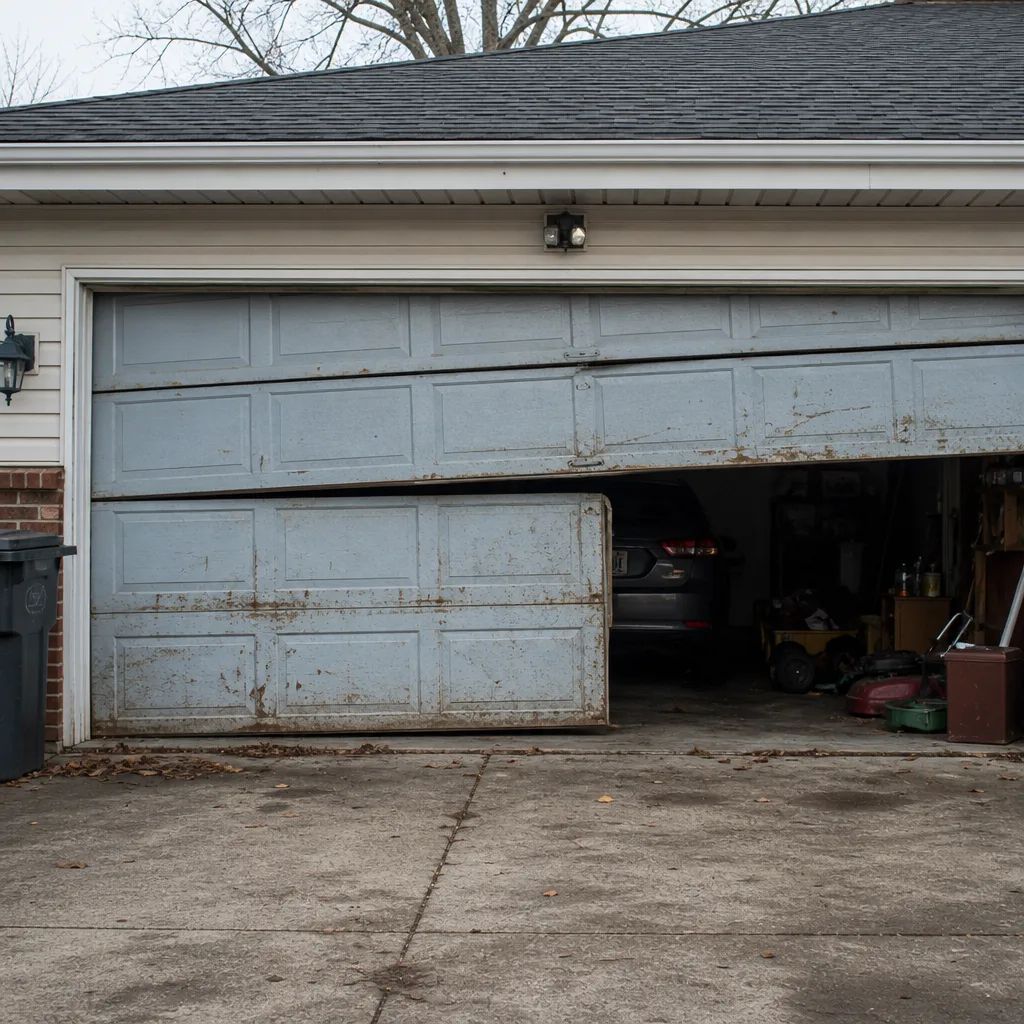 Before
 After
 Before
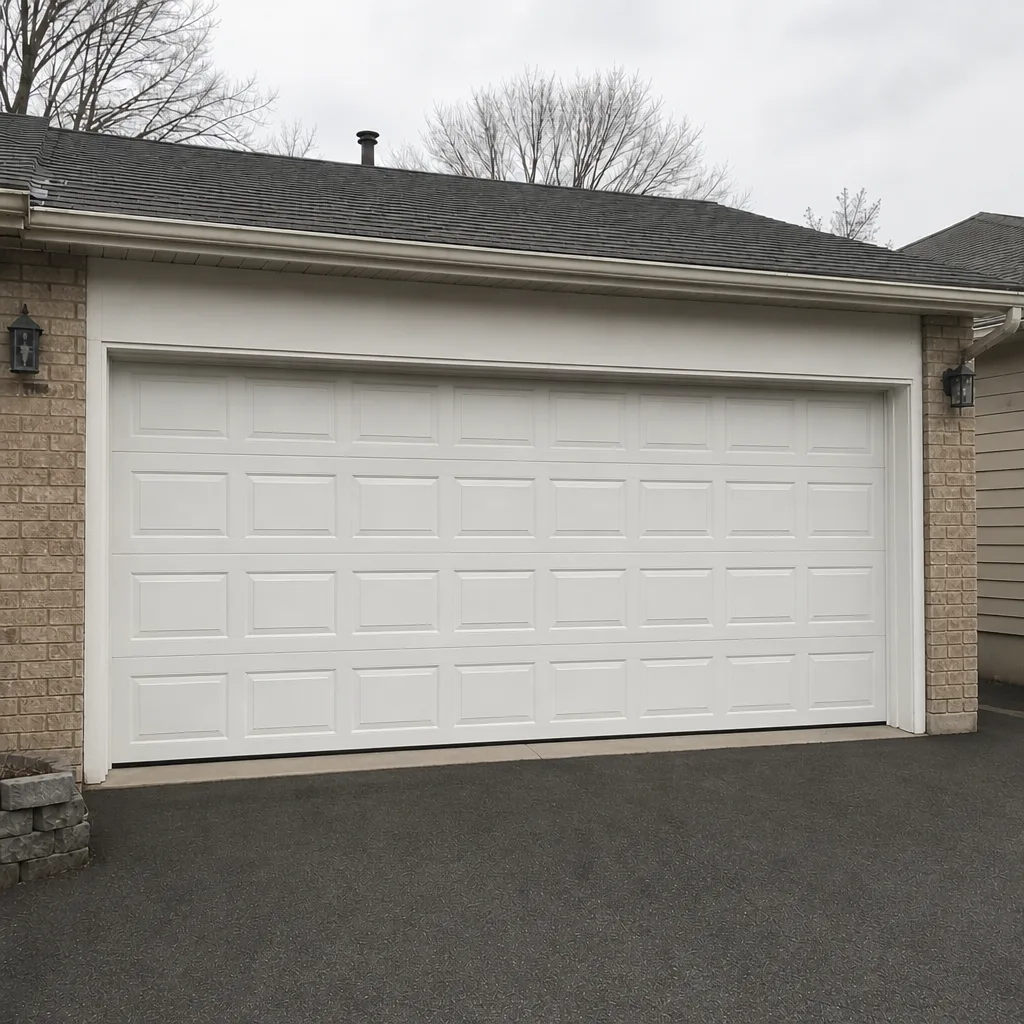 After
When to Call a Professional
Call in when the task involves a spring, a cable, a bottom bracket or an off-track door – and call urgently if any of those things happen while the door is open or moving. Call for a dead opener if a battery change and a learn-button reset don’t fix it. Call for a door that drops fast, closes unevenly, or sounds different from last week. Call for a full new door and get a written estimate instead of measuring wrong. Maple Grove Garage Door Repair Co offers free estimates in Maple Grove – call (877) 711-1381. Emergency service is part of what we offer, so a stuck door doesn’t have to wait until Monday morning. If your opener is dead and you’d rather skip the guesswork, we handle garage door opener repair across the Chamberlain, LiftMaster, Genie and Craftsman families, so the diagnosis usually starts with a familiar system instead of a mystery.
Frequently Asked Questions
It’s worth it for lubrication, sensor alignment, track cleaning, seal replacement and careful inspections. It’s not worth it – and genuinely unsafe – for springs, cables, bottom brackets and off-track doors. The dividing line is stored energy: if a job puts your hands near a wound spring or a loaded cable, it belongs with a professional.
Spring repair is priced on inspection, and a matched pair is nearly always replaced together – so the pair costs noticeably more than a single spring. We won’t quote a fixed number over the phone because the correct spring is matched to your door’s weight and height, and a wrong guess is a safety issue. A written estimate comes before any work starts. Call (877) 711-1381 for an exact quote – estimates are free.
Often, yes. Emergency garage door service is a real offering, not a marketing phrase – we can get to a stuck or broken door rather than making you wait until Monday morning. Call (877) 711-1381 and we’ll work out the timing. If the door is open with a broken spring, keep people and vehicles clear of it until someone’s there.
Not without your say-so. The written estimate sets the price before work begins, and if we find something that changes the job, we tell you before we do anything. There’s no after-the-fact surprise on a spring or opener replacement. That’s the point of the estimate.
The local professionals we connect you with are licensed and insured as their state requires. Our technicians have up to 14 years of experience, and they’re certified to work on eight of the major residential garage door and opener brands, including LiftMaster, Chamberlain, Genie and Craftsman.
Sometimes. A dead remote battery, a remote that’s lost its code, or a safety sensor out of alignment all belong in the DIY column. If a fresh battery and a sensor alignment don’t fix it, the diagnosis moves inside the opener – a job for a technician, since opener internals carry main voltage. Don’t open the opener housing yourself.
Cold tightens metal and stiffens lubricant, so a door that was quiet in October often gets noisier by January. That’s frequently a lubrication and cleaning job, which you can do yourself. If the sound continues after a lubricating session, or the door starts moving unevenly, have it looked at before it becomes a bigger repair.
The Bottom Line
The DIY-versus-pro question isn’t really about how handy you are. It’s about which category of task you’re standing in front of. Lubrication, sensor alignment, cleaning and careful inspections are yours to handle, and we’d rather you do them than pay for them. Springs, cables, brackets and off-track doors are not – those jobs carry real stored energy and belong with someone trained, no matter how capable you are. In a Maple Grove winter, that split gets even clearer: check for ice and stiff hardware first, save the mechanical work for when it matters, and get a written estimate before anyone touches the springs. When a job crosses the line, we’re here for it. Start with Maple Grove Garage Door Repair Co and one call covers the repair, the opener, the spring or the full installation.
Get a Free Estimate in Maple Grove
If you’ve read the task list and your job lands on the “don’t DIY” side, that’s not a failure – it’s the right call. We’ll diagnose it properly, explain what’s actually wrong, and give you a written estimate before any work starts. Whether you’re facing a snapped spring, an opener that’s given up, or a full door replacement, one call covers it. Call (877) 711-1381 today for a free estimate in Maple Grove, and let’s get your door back up and running.
Written by the team at Maple Grove Garage Door Repair Co.